
With a WordPress page builder, you don’t need any programming knowledge to create professional websites. The tool replaces or supplements the standard editor and lets you put together galleries, buttons, text areas and entire layouts using drag and drop. But with so many options on the market, choosing the right one can be overwhelming. This guide introduces you to the best WordPress page builders and helps you find the one that fits your specific situation.
Key takeaways
- A page builder replaces or extends the WordPress standard editor with visual drag and drop functionality.
- The right builder depends on your project, your workflow and your performance requirements.
- Elementor, Divi, Bricks, Beaver Builder and WPBakery are the most widely used options in 2026.
- For simple sites, Gutenberg is often the leaner and faster choice.
- Performance, hosting compatibility and tool commitment are the most important decision factors
New: Raidboxes AI Site Assistant
With the new Raidboxes AI Site Assistant, you can create your website in just a few steps – without any technical stress. Whether it’s a business website, store or portfolio: You enter your prompt and the AI delivers the design, structure and content. Test the new AI Site Assistant now!

When a WordPress page builder makes sense and when it does not
Before committing to a page builder, it is worth taking an honest look at your specific situation. A page builder is not a one-size-fits-all solution. In some cases it will save you hours of work. In others, it simply adds unnecessary complexity.
When a page builder is worth it
A page builder makes sense when you regularly build websites with complex, custom layouts that go beyond what Gutenberg offers out of the box. If you are working on multiple client sites and want to reuse templates, a page builder will significantly speed up your workflow.
It also pays off when your clients need to update content themselves without your involvement. A good page builder gives non-technical users a visual interface they can actually work with, without breaking anything.
And if the visual design of a project plays a central role, such as a portfolio, a landing page or an online store, a page builder gives you the design freedom that Gutenberg simply cannot match.
When a page builder is not the right choice
If your site is primarily text based and does not require complex layouts, Gutenberg is often the leaner and faster choice. Adding a page builder for a simple blog or a basic business site means loading additional CSS and JavaScript that your visitors do not need.
Page builders are also worth reconsidering if page speed is non-negotiable for you. Most builders add code overhead that affects your Core Web Vitals scores, and optimizing around this takes time and effort.
And if you are not planning to stick with a tool, think carefully about how much you depend on it. Switching builders later can mean rebuilding layouts from scratch, depending on how deeply the tool is integrated into your content.
WordPress hosting management
With our Raidboxes dashboard, you get a seamless, intuitive interface that makes managing your WordPress sites easier, faster, and more efficient. Check it out!
Decision criteria: How to choose the right WordPress page builder
Choosing the right page builder is not a matter of personal preference. It depends on real requirements. Here is what actually matters.
Performance and page speed
Every page builder adds extra code. The question is how much of it loads on every single page. Tools like Elementor or Divi are powerful but can generate a significant number of HTTP requests and larger CSS files compared to a lean Gutenberg setup. If strong Core Web Vitals scores matter to you, whether for SEO or e-commerce conversion, run performance tests before committing to a tool rather than after launch.
Flexibility vs. complexity
More features sound appealing until you realize that a simple text change requires navigating five nested layers. Be honest about how much flexibility you actually need. A builder with 200 widgets means nothing if you only use ten of them.
Maintenance effort and update risks
Page builders are updated regularly, which is a good thing but also carries risks. An update can break existing layouts, cause compatibility issues with other plugins, or introduce new dependencies. Especially on client projects, you should know how actively a tool is developed and whether updates can be rolled out safely without putting your live site at risk. A staging environment is not a luxury here, it is a necessity.
Theme dependency and lock-in effects
Some page builders are tightly coupled to a specific theme. Divi is the most prominent example. This works well as long as you stay within the ecosystem. But if you ever want to switch themes or migrate to a different builder, things can get messy. Tools like Beaver Builder or Brizy that work without shortcodes give you more independence, since your content remains intact even after deactivating the plugin.
Hosting and caching compatibility
An often overlooked point: not every page builder works equally well with every hosting setup. Server-side caching, CDN integration or object caching can sometimes conflict with specific builders and cause unexpected behavior. Make sure your hosting is explicitly optimized for the page builders you use.
Have you heard of Raidboxes hosting yet?
Try Raidboxes – currently with a 50% discount
Try Raidboxes for up to 14 days for free with a copy of your website – and get 50% off when you switch to Raidboxes.
The 16 best WordPress page builder plugins
What follows is a list of the best WordPress page builder plugins currently on the market. There’s a combination of free and premium tools, so as a developer:in you can find something that works at any stage of your career. Let’s go!
1. WPBakery Page Builder
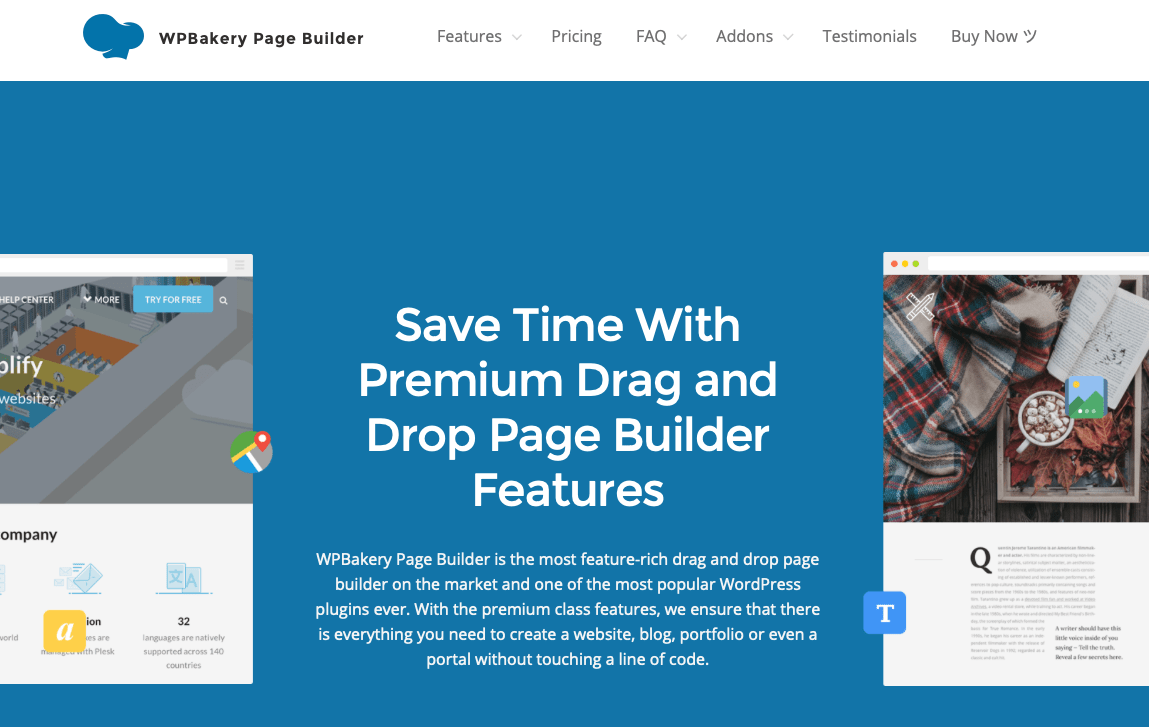
WPBakery Page Builder is currently the most popular WordPress page builder plugin. It used to be called Visual Composer, but this has since been split off into a separate tool, with the page creation functions remaining with WPBakery.
WPBakery Page Builder serves as a frontend and backend page builder that enables the creation of responsive designs. With multiple templates and lots of flexibility, it’s a solid choice.
What is the WPBakery Page Builder?
WPBakery is one of the pioneers in the field of WordPress Page Builder. The former Visual Composer was renamed WPBakery Page Builder. This new WordPress Page Builder focuses on the visual processing of content such as posts or pages.
Since WPBakery has been around for a long time, you will find many integrated layouts and building blocks such as boxes, icons, text blocks and diagrams with which you can design your content. In addition, many third-party providers offer thousands of useful elements for an expressive appearance and over 250 integrations with other important plugins such as WooCommerce.
The WordPress Page Builder should work with every theme. This compatibility is probably due to the fact that all elements are integrated via shortcodes. If you deactivate the plugin, shortcodes will remain in your content.
The interface is intuitive, but no longer up to date, requires manual saving and is significantly slower than the competition. Nevertheless, the advantages of this WordPress page builder may outweigh the disadvantages, depending on the intended use.
Key features:
- WPBakery Page Builder can be used with almost any WordPress theme
- 50+ content elements
- Built-in skin builder allows quick element styling
- A robust template library
- Fully extensible via WPBakery Page Builder API
- Advanced Grid Builder
- Dedicated support from Monday-Saturday
Advantages of WPBakery Page Builder:
- Many content elements, also available from third-party providers
- Integration with more than 250 known plugins possible
- Many design templates
Disadvantages of WPBakery Page Builder:
- Slow, partly overloaded interface
- Parts of the interface are not up to date, for example the image size has to be entered manually via “large”, “thumbnail” or “small”
- No automatic saving function
Best WordPress page builder for: Experienced developers and newbies. The plugin is easy to use, fully featured and makes it easy to use pre-built templates and create your own.
Price: WPBakery uses lifetime licenses, meaning you pay once and use the tool permanently. The Regular License costs €69 and covers a single website. The license for up to 5 websites costs €256 and the license for up to 10 websites €499. All plans include free updates, access to the Template Library, WPBakery AI and partner discounts, each including one year of support.
2. Visual Composer website builder
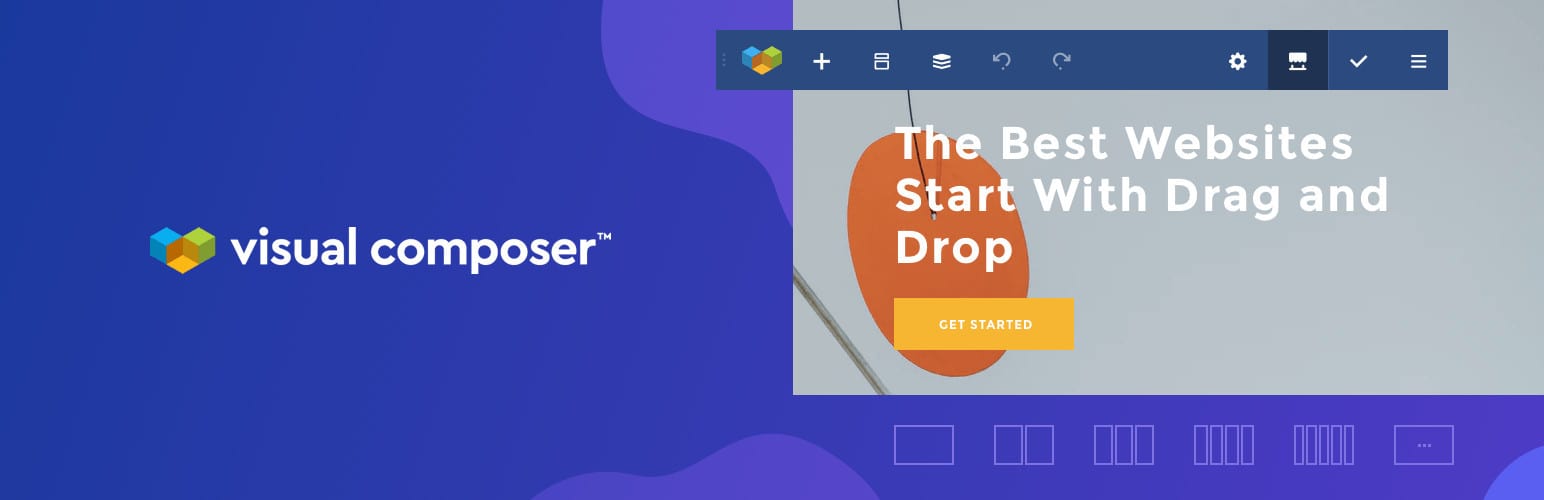
After the developers launched the WPBakery Page Builder, it seemed to be the end of the Visual Composer. In reality, they have been working hard on it and have not only developed a WordPress page builder, but also a complete site builder. This refers to a visual editor with which you can not only change the content without programming knowledge, but also other layout areas of the WordPress site such as the footer or header.
With Visual Composer, you can edit content and layout directly in the frontend and work with many customisable elements. The user interface is modern, can be used either as docked or floating and enables quick results after familiarisation.
WooCommerce Hosting
With WooCommerce hosting, you can launch your own online store quickly and securely and manage it professionally – without any technical hurdles. Check our Raidboxes WooCommerce Hosting now.
You also get access to the Visual Composer Hub with 100 content elements and 100 page layouts that you can download and use. With the competition among WordPress page builders, these elements are usually integrated and do not require an additional download.
Visual Composer is available in a subscription model from USD 59 per year. There is a 40 per cent discount from the second year.
Advantages of Visual Composer:
- Text and layout can be edited directly on the page
- Attractive layouts can be conjured up after just a short familiarisation period
- Visual Composer Hub with many extensions
- 3-in-1 solution: front-end and tree view editor
- Development interface
- Elements can be hidden and displayed again later
- Supports CSS and JavaScript editing
Disadvantages of Visual Composer:
- The Undo and Redo functions do not work correctly
- Parts of the interface are outdated, for example, the image size must be entered as a word
Price: Visual Composer is available as a free limited version. Premium plans start at $49/year for one website and go up to $349/year for the Agency Plan covering 1,000 websites. All plans include the same features, the only difference is the number of websites. Those who prefer a one-time payment can opt for the Lifetime License at $149, including lifetime updates and two years of support.
My tip: You can find a detailed comparison between the WPBakery Page Builder and Visual Composer here.
3. Elementor
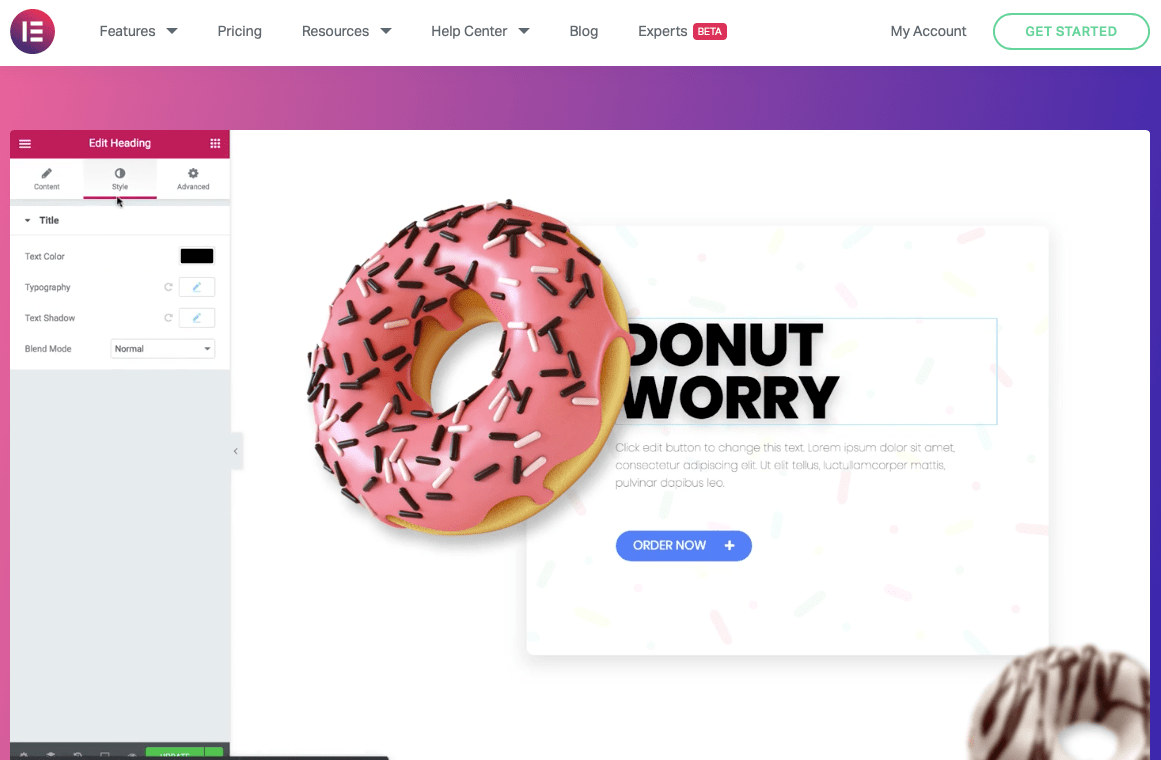
Elementor is one of the best free WordPress page builder options. While it offers premium plans, the free version gives you access to a drag and drop website editor, 40 widgets, 30 templates and responsive editing. Elementor gets even more impressive when you venture into the premium features.
Although the WordPress page builder called Elementor is one of the newest, it is already running on more than half a million websites. The rapid success is probably due to the successful interface and the outstanding ease of use.
This allows you to easily edit posts, pages, customised content and even category pages – in the frontend and backend. This means you don’t need to design your content in the administration area, but can view it directly from the visitor’s perspective and change it in the WordPress page builder using drag & drop.
Elementor offers you many elements that you can use for your own layout: Buttons, headings, animations, galleries and much more. The scope can be extended endlessly by installing special Elementor plugins. Integration with WooCommerce and numerous other extensions and themes that provide their own Elementor blocks is also possible.
The free version of Elementor has more than 30 elements and 60 preset layouts for a quick start. The Pro version includes a further 26 modules such as menus, tables and price lists. These are particularly useful if you want to integrate social media or display WooCommerce products.
Page Builder – Curse or Blessing for the WordPress World?
It has never been easier to design a professional website with a huge range of functions even without a lot of background knowledge. But WP freelancer Pascal Prohl is divided as to the use of such helpers – in his article about the advantages and disadvantages of page builders you can find out why.
The excellent theme builder is worth mentioning: This gives you a framework for quickly assembling your own theme layout for the various post and page types – without any programming knowledge, completely from Elementor components. All the layouts that you put together in this WordPress page builder can be reused on the same website or on others.
Key features:
- Over 50 Pro Widgets
- Over 300 Pro templates
- 10 complete website construction kits
- Builder for themes and forms
- WooCommerce and popup builder
- One year of support and updates
Advantages of Elementor:
- Even the free version comes with many templates and features
- Layouts can be set flexibly and precisely
- Fast, fluid editing mode including real-time front-end editing
- Many high-quality elements that can be quickly adjusted and used
- Elementor users are also provided with fresh elements and templates by many third-party providers
- Deactivation leaves no shortcode rubbish behind
- The Pro version comes with a pop-up builder, a visual form generator, animations and special effects for appealing content
- Elementor supports translations with plugins such as WPML
- Development interfaces for comprehensive integration are available
Best WordPress page builder for: Anyone who only has one website or who wants to try out the website builder experience for free. Elementor’s premium plans shine with a favourable price for developers.
Price: Elementor offers both a free and premium options. The Essential Plan costs €60/year for a single website and includes everything in the free plan, plus the features listed above. The remaining plans all include the same features but adjust the number of websites Elementor can be used on. The Advanced Plan costs €108/year for up to three websites.
The Expert Plan is designed for freelancers managing up to 25 websites and costs €204/year. Agencies looking to manage unlimited websites can opt for the One Agency Plan at €444/year.
4. beaver builder
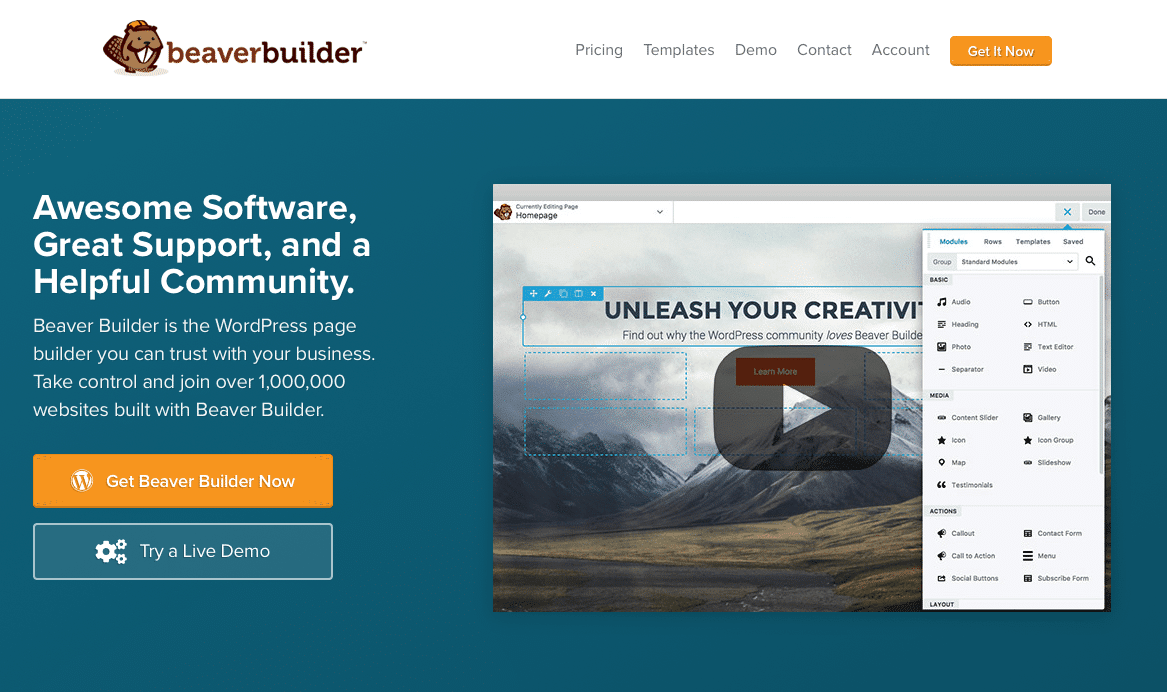
Beaver Builder is another popular WordPress drag & drop plugin that greatly simplifies the website creation process. It offers a page builder plugin and a framework theme so that developers can quickly create websites and condense their workflow.
The Beaver Builder is reliable and simple. Compared to the competition, the WordPress page builder focusses heavily on performance and stability – instead of an infinite number of features. You experience design results like the competition, but first you invest time in familiarisation and learn to cope without a large element library.
If you become familiar with the user interface, you will discover that Beaver Builder is a powerful tool that works reliably. In contrast to most WordPress page builder competitors, no shortcode is generated here, but layouts are set directly via HTML and CSS.
One resulting advantage: You can uninstall the plugin and still keep the layouts. You can also edit them later without the Beaver Builder and combine them effortlessly with different themes.
Key features:
- Live and front-end editing
- Responsive and mobile-friendly designs
- Support for shortcodes, widgets and WooCommerce
- The option to activate editor mode to hand over websites to customers
- Full support
- Several easy-to-insert modules
Advantages of Beaver Builder:
- Free version offers important basic features
- Excellent front-end editing with fast switching to preview mode in real time
- Does not generate shortcodes, but clear HTML and CSS code
- Changes are retained even after deactivating the plugin
- Top performance
Disadvantages of Beaver Builder:
- Comparatively few content elements
Best WordPress page builder for: Developers who want multiple module options. Some developers will also enjoy the Pro plan, which includes the Beaver Builder theme.
Price: Beaver Builder is available as a free version. If you need more features, there are four paid plans. The Starter Plan costs $89/year and includes the Page Builder Plugin, Beaver Builder Theme, Beaver Themer, Loop Builder and WooCommerce Support for a single website.
The Plus Plan costs $179/year and includes the same features for up to three websites. The Professional Plan costs $299/year and is designed for agencies and freelancers, with support for up to 50 websites and multisite capability. The Unlimited Plan costs $546/year and offers unlimited websites, White Labeling, Advanced Courses, Priority E-mail Support and 6 months of Assistant Pro for free.
5. Themify Builder
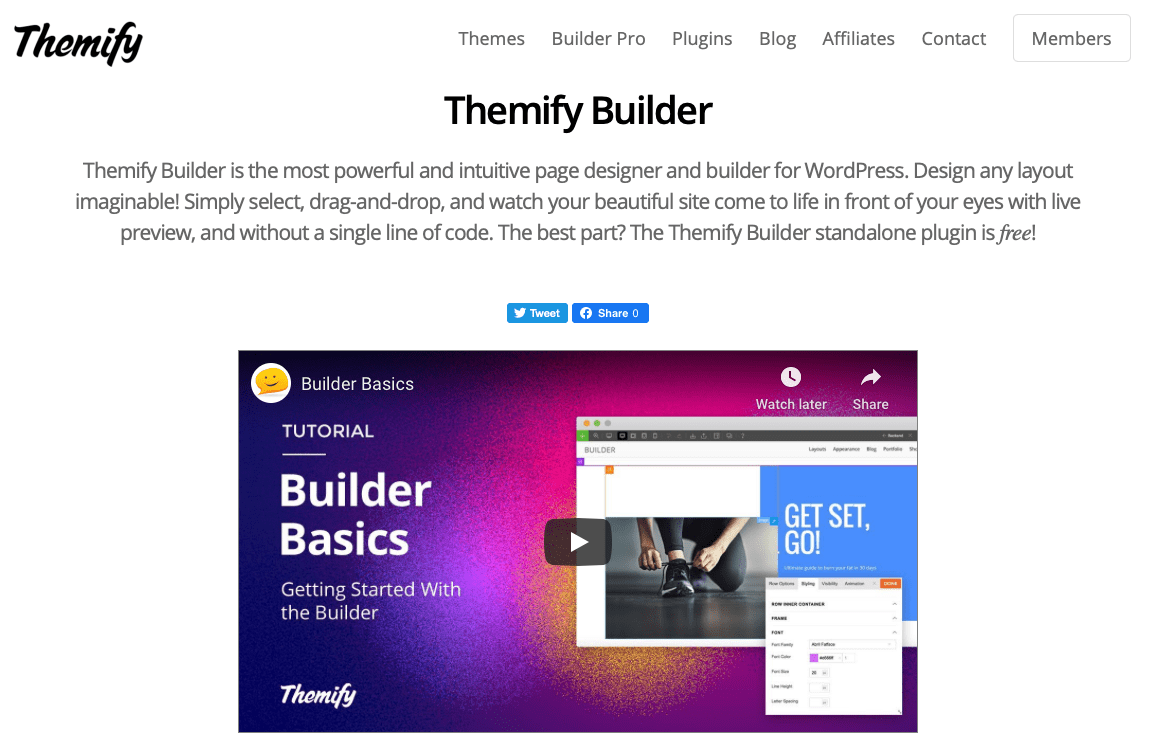
Another one of the best free WordPress page builders is Themify Builder, which offers a free download of its plugin that you can use on any theme of your choice. However, if you need more guidance, the plugin is also bundled with Themify Themes.
Key features:
- 40+ pre-designed layouts
- Support for row, column and grid layouts
- The option to create layout parts
- 60+ animation effects
- Customised styling
- A variety of add-ons
- Support for custom code and shortcodes
Best WordPress page builder for: Anyone who needs a flexible page builder. The plugin can be used with any theme, making it a good choice for developers who want to speed up website development or create ready-made templates for their customers.
Price: Themify Builder is available for free. Those who want access to all Themify themes and plugins can choose between two membership plans: The Master Club costs $89/year and includes one year of access and support for all Themify products on unlimited websites. The Lifetime Club costs a one-time payment of $249 and offers lifetime access and support for all Themify products.
6. Divi Builder
Another drag and drop WordPress plugin you should consider using is Divi. With it, you can build entire websites visually and rely on drag & drop elements for easy rearrangement.
The Divi Builder is modern, user-friendly, comes with many functions and around 50 ready-made elements for the website. Similar to the other WordPress page builders, there is frontend and backend editing here – whereby the direct text editing particularly stands out in the former.
If you are logged in as an administrator, you can open a subpage in the frontend and edit the text there with a click, just like in Word, without having to open an additional window. As you move the elements in a page builder using drag & drop – which sometimes works too imprecisely – Divi offers the wireframe mode. This mode is a special view in which module positioning is much easier.
One of the disadvantages of this WP page builder is the large CSS file, which makes manual adjustments difficult. You will also notice in edit mode that the operation slows down for complex layouts with many elements.
Since Divi Builder, like most other WordPress page builders, relies on shortcodes, your layouts will disappear as soon as you deactivate the plugin. They only come back after reactivation. Nevertheless, Divi is worth a test with its solid features and successful user guidance.
Key features:
- Visual and responsive editing
- 40+ design modules
- 800 ready-made website layout packages
- Inline text editing
- Global elements and styles
- Undo and redo functions
- Complete element customisation
- CSS styling options
Advantages of Divi Builder:
- Divi Builder comes in a package with more than 110 themes.
- Wireframe mode
Disadvantages of Divi Builder:
- Large Divi CSS file
- Based on shortcodes
Best WordPress page builder for: All. Divi Builder offers a generous number of design elements and layouts to choose from, so both new website owners and experienced designers can find what works for them.
Price: Since Divi Builder is from ElegantThemes, your purchase gives you access to more than 110 themes in addition to the WordPress page builder: The standard plan costs $89/year and includes unlimited use of Divi on as many websites as you like, regular updates and premium support.
If you need more power, the Divi Pro Plan at $277/year is the way to go. It adds Divi AI for AI-assisted design, Divi Cloud for unlimited cloud storage, Divi Teams for collaboration with up to 4 team members and VIP support with a response time of under 30 minutes.
7. SiteOrigin Page Builder
Another WordPress drag & drop editor worth considering is SiteOrigin Page Builder. This plugin is free and responsive and offers a robust set of tools for anyone who wants to create a website without having to dive into the code.
Key features:
- Simple drag & drop page builder interface
- Compatibility with most WordPress themes
- Works well with standard WordPress widgets
- Live, front-end editing
- History browser
Best WordPress page builder for: Developers on a budget. The SiteOrigin page builder isn’t as visually appealing as others on this list, but it has features you can use that will save you time.
Price: The SiteOrigin Page Builder is free of charge. However, there are premium add-ons that extend the functionality and add modules such as contact forms, block animations, accordions and calls-to-action. The add-ons cost $29 for use on a single website, $49 for use on up to five websites and $99 for use on unlimited websites.
8. Brizy
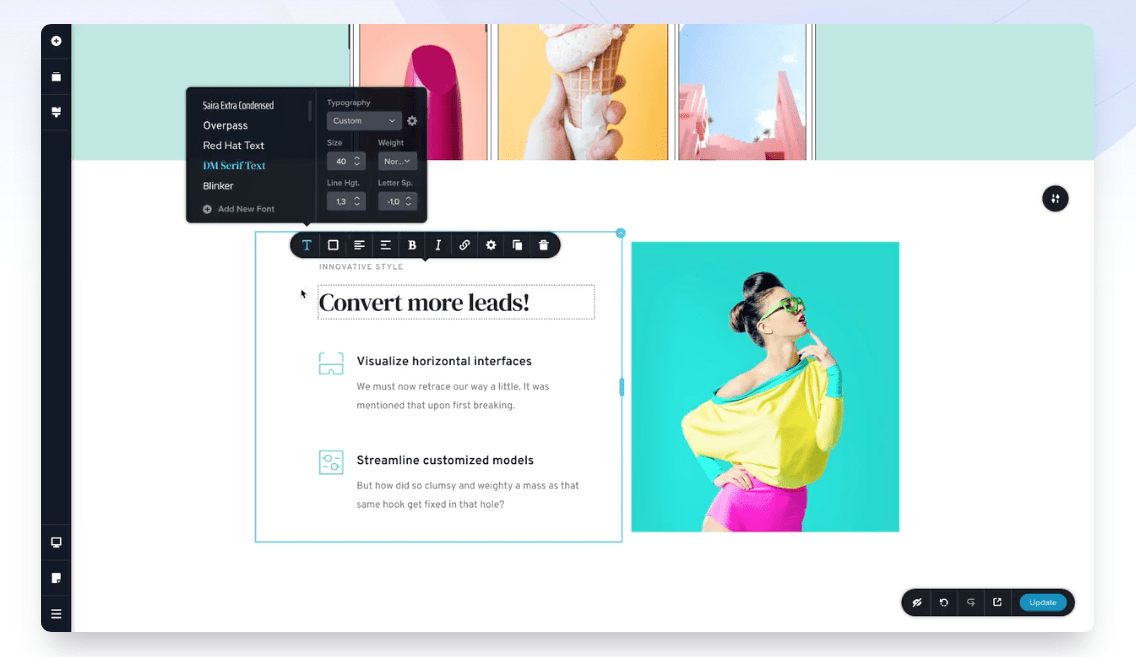
Brizy is another WordPress editor plugin with many features. It is based on React and comes with multiple templates to speed up your creative process.
Brizy is a fairly new WordPress page builder. The developers have opted for a modern interface and a particularly large number of high-quality designs and templates. You can edit your pages directly in the frontend without complicated menus. Click on the text and edit it just like in Word. It’s just as easy to create new page elements and create column layouts in no time at all. The WordPress Page Builder works extremely smoothly and reliably.
If you don’t just want to design the content of your posts and pages, you need Brizy Pro. Similar to Visual Composer, this also allows you to edit other areas such as footers or headers in just a few clicks. If a group is working on your site, role management is a good option. Here you determine who can edit what. Fortunately, the WordPress Page Builder works without shortcodes and thus offers you more independence: after deactivation, you are spared code deserts.
Global blocks are an interesting feature. This refers to elements that you can set centrally and then make available to your other websites via the cloud. You could announce an event in a global block and this announcement is then automatically visible on your other pages that contain that global block. Another plus point for Brizy is the automatic saving, which works better than with WordPress Page Builder competitors.
Key features:
- Real-time editing
- Drag and Drop WordPress Theme Interface
- 400+ templates
- Visual contact forms
- Animated sliders
- Customisations for edges, corners, borders and upholstery
- Shadow, image focus and zoom
- Support for global styling
Advantages of Brizy:
- Wonderfully simple and fluid editing in real time, directly in the front end
- More than 150 ready-made content blocks
- Many professional layouts for numerous application scenarios
- Quick creation of column layouts
- Extended user administration with role assignment
- Brizy Pro can also edit footers and headers
- Global blocks for cross-site content distribution
- Fast automatic saving function
- Brizy is quickly supplied with updates
Disadvantages of Brizy:
- Basic features are expandable.
Best WordPress page builder for: Anyone interested in drag & drop WordPress themes. Brizy offers several features and tools that other page builders don’t have. Global styling, for example, is a great time saver.
Price: Brizy offers four WordPress plans. The Personal Plan costs $69/year for one website. The Freelancer Plan costs $119/year for up to 25 websites. The Agency Plan costs $239/year for up to 50 websites and additionally includes membership functionality, priority support and WP Multisite support. Those who need white label features can opt for the White Label Plan at $359/year for up to 100 websites. All plans include the AI Builder and all standard PRO features.
9. Thrive Architect

As far as drag & drop WordPress themes and plugins are concerned, Thrive Architect simplifies the process of creating customised websites and landing pages.
Key features:
- Complete drag & drop editing
- 278 landing page templates
- Various conversion elements to boost your business
- Blog post styling to improve social shares
- Flexible column layouts
- Text and image combinations
- Font customisation
Best WordPress page builder for: Those who want to create a sales-focused website. Whether you want to build your email list, sell products or encourage sharing, Thrive Architect makes these goals easier to achieve.
Price: Thrive Architect is no longer available as a standalone product and can only be purchased as part of one of three packages. The Thrive Suite costs $299/year and includes all Thrive plugins including Thrive Architect and Thrive Theme Builder. Those who only need the Theme Builder pay $99/year. The combination of Thrive Theme Builder and Thrive Architect is available for $199/year.
10. Bricks

Bricks is a visual site builder for WordPress that has gained popularity among developers and agencies since its launch in 2021. Unlike most other tools, Bricks is not a plugin but a complete theme with an integrated builder. This gives you full control over every area of your website, from header and footer to archive pages and 404 pages.
The biggest difference from established tools like Elementor or Divi lies in the code output. Bricks generates clean, semantic HTML without unnecessary wrapper elements, which has a positive effect on loading times and Core Web Vitals. For developers, the builder offers access to custom CSS, JavaScript and PHP, as well as a class based styling system with native Flexbox and CSS Grid support.
The Query Loop Builder is particularly useful, allowing you to visually build dynamic content like custom post types or listings. WooCommerce, Popup and Form Builder are also integrated. However, getting started takes some time, especially if you are coming from more beginner friendly tools like Elementor. And the template library is noticeably smaller than the competition.
Key Features:
- Visual full site editing without a separate theme
- Clean HTML and CSS output
- Query Loop Builder for dynamic content
- Integrated WooCommerce, Popup and Form Builder
- Custom CSS, JavaScript and PHP support
- 110+ elements included in all plans
Advantages of Bricks:
- Clean code output and fast loading times
- No separate theme needed
- Active development with a public roadmap
Disadvantages of Bricks:
- Requires solid HTML and CSS knowledge
- Smaller template library
- Younger tool with fewer third party integrations
Best WordPress page builder for: Developers and agencies who prioritize performance and clean code.
Price: Bricks offers three annual plans and one lifetime option. The Starter Plan costs $79/year for one website, the Business Plan $149/year for up to three websites and the Agency Plan $249/year for unlimited websites. Those who prefer a one time payment can opt for the Ultimate Lifetime License at $599, including all future updates and support. All plans include the full feature set and 110+ elements.
11. Oxygen
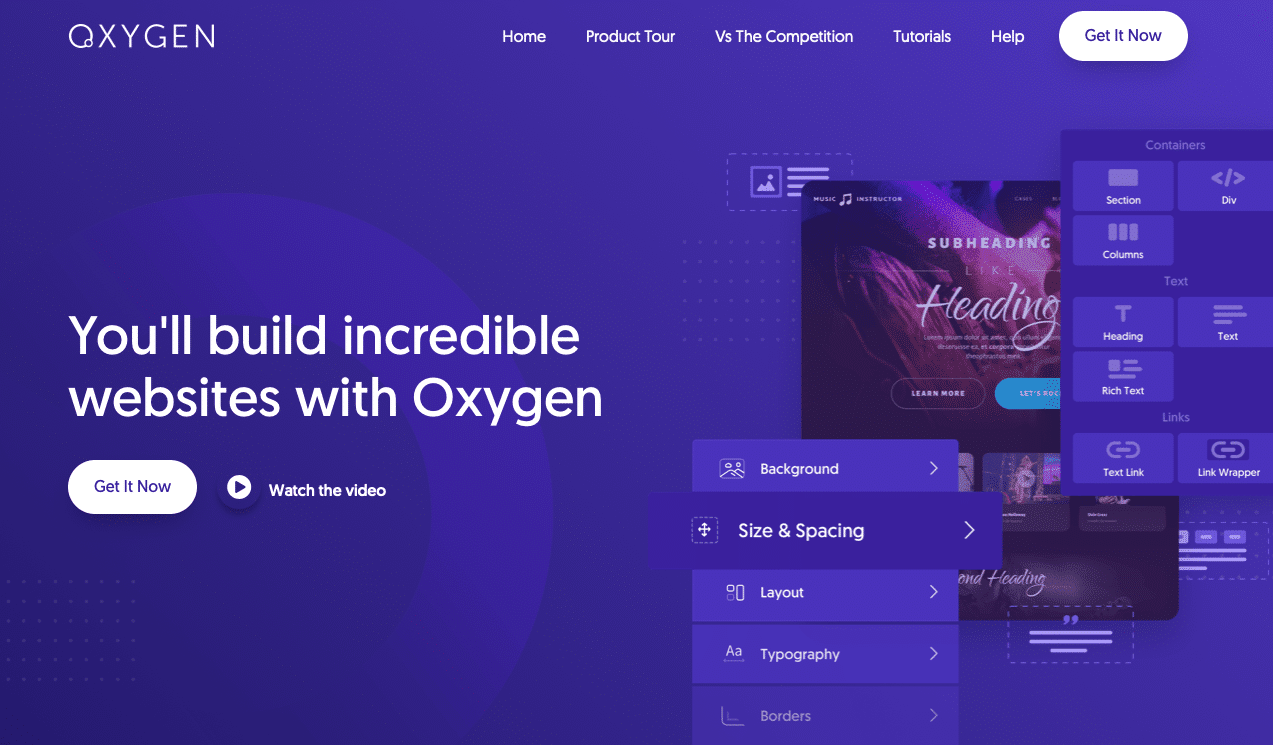
Visual Editor Oxygen is a unique entry in this list. Oxygen offers similar functions to the others presented here, but the organisation of the tools and functions is focused on three key areas:
- Visual website building
- WooCommerce shop management
- Website performance and search engine optimisation (SEO)
Oxygen works differently to similar WordPress page builders. It connects to WordPress as a plugin and creates a separate sandbox module, replacing the WordPress interface and allowing the entire design to take place there.
Oxygen has been competing for supremacy among WordPress page builders for some time now. The editor is sophisticated and comes with a fluid and intuitive user interface. Similar to Brizy, you get a very large selection of high-quality designs and templates that you can use for your site.
Although the Page Builder is also suitable for non-programmers, its great strength lies in its support for PHP, JavaScript, CSS and, of course, HTML. Coders will be delighted with this important flexibility. Unfortunately, Oxygen generates shortcodes that remain visible as rubbish code if Oxygen is deactivated.
Key features:
- Visual editing via drag & drop
- Visual control of WooCommerce
- Customised header builder
- Global colours
- Fully expandable for developers
- Dynamic data
Advantages of Oxygen:
- Intuitive user interface
- Complex layouts can be put together very quickly
- Many content elements and templates
- Support for PHP and JavaScript leaves nothing to be desired for developers
- Customer-friendly pricing
Disadvantages of Oxygen:
- Shortcodes are generated
- The focus is on developers, which can also be an advantage depending on your point of view
Best WordPress page builder for: Developers. As far as drag & drop WordPress themes and plugins go, Oxygen can easily be used by beginners. But its advanced features are well suited for developers who want to offer their customers more.
Price: Oxygen uses lifetime licenses, meaning you pay once and use the tool permanently. The Basic Plan costs $129 and includes an unlimited lifetime license. The WooCommerce Plan costs $149 and adds WooCommerce integration to the Basic Plan.
The Ultimate Plan costs $179 and includes all features, including the Gutenberg Block Builder, Simplified Client UI and Composite Elements. Those who also want Oxygen 6 and all premium add-ons can purchase the Lifetime Bundle for $199.50.
12. MotoPress Content Editor
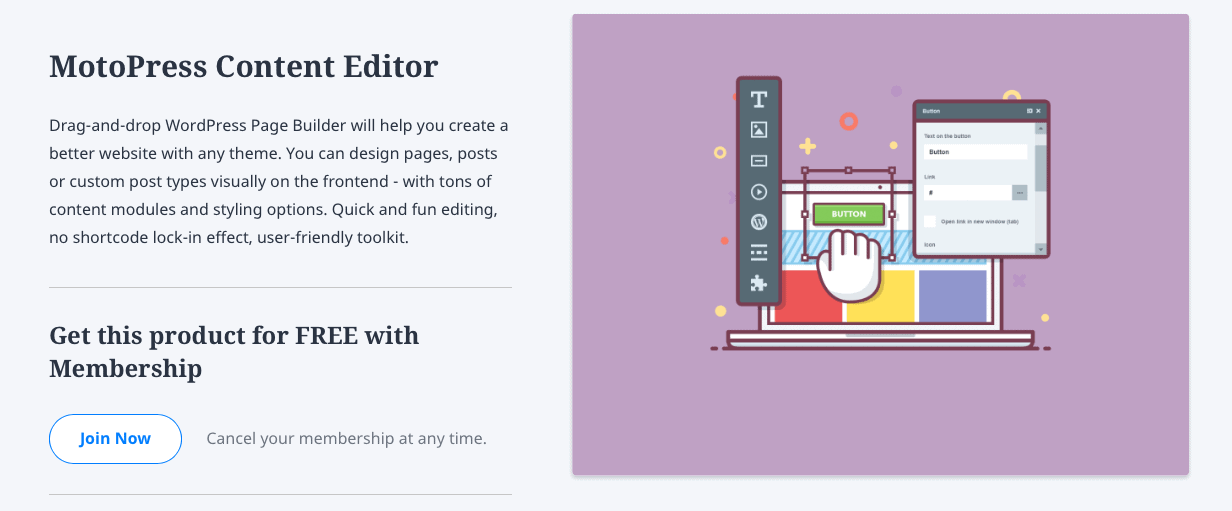
The MotoPress Content Editor is a low-cost, multilingual WordPress page builder that merges with the WordPress editor and offers very convenient real-time frontend editing. It works with all themes and is suitable for customising pages, posts and other user-defined content.
Various ready-made design templates and elements are included. If you need more, you can purchase additional layouts and blocks. Developers can purchase an additional white label plugin to customise the editor branding and offer customers a professional, uniform look.
Key features:
- Frontend editing
- Predefined layouts
- Style Builder
- Ready-made drag & drop WordPress themes
- Compatible with Multisite and WPML
- Prefabricated content elements
- Expandable via add-ons
Advantages of MotoPress Content Editor:
- User-friendly front-end editing
- Favourable premium version (29 USD)
- WooCommerce support included as standard
- Supports WPML
Disadvantages of MotoPress Content Editor:
- Comparatively few prefabricated elements available
Best WordPress page builder for: Those who want straightforward content editing features and developers who want to white-label the client-side experience.
Price: MotoPress Content Editor has three plans. Personal costs $39/year for one website, Business costs $69 for use on five websites and Developer costs $139 for use on unlimited websites.
13. page builder sandwich
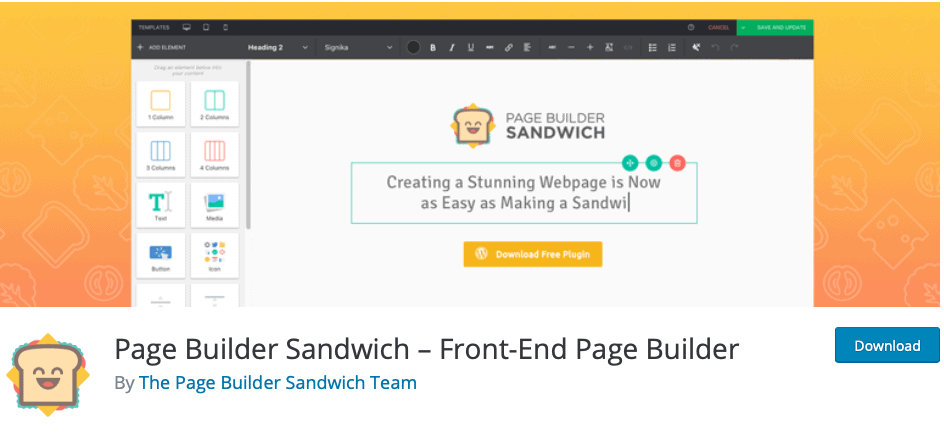
Page Builder Sandwich is one of the latest free drag & drop WordPress themes and plugins currently available. But that doesn’t mean it’s not worth considering. It offers a healthy set of features, and that’s remarkable for an open source WordPress page builder.
Key features:
- Live editing
- Fully customisable
- Backend and frontend processing
- Complete page templates
- Global shortcodes
- Compatible with most common plugins and themes
Best WordPress page builder for: New website owners. Since it has a robust free option and a wide range of features, you can create pages visually without extra features getting in your way.
Price: Page Builder Sandwich offers both yearly and lifetime plans. The yearly plans start at $29/year for one website, $49/year for five websites and $199/year for unlimited websites.
Those who prefer a one-time payment can choose between the lifetime plans: $89 for one website, $149 for five websites and $599 for unlimited websites. All plans include pro designs, all premium elements, 10 page templates and 40+ pre-designed sections.
14. GeneratePress
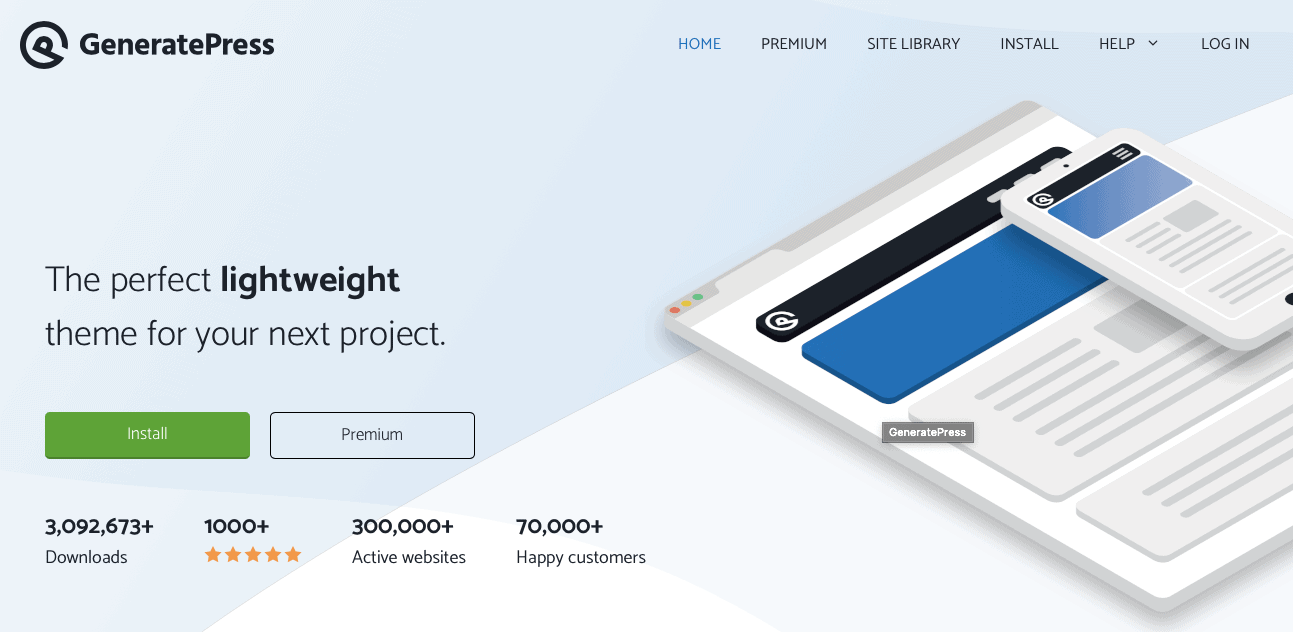
GeneratePress is a lightweight drag & drop WordPress theme that prioritises performance with fast loading times and small file sizes.
Key features:
- Supported by secure and stable code
- Optimised for search engines
- Prioritises accessibility
- User-defined colours and typography
- Page Builder compatible
- Layout control
Best WordPress page builder for: All developers. Although it is technically a theme, GeneratePress loads WordPress and enables in-depth customisation and optimisation.
Price: The basic GeneratePress theme is free. For more features, there are three paid plans and one bundle. GP Premium costs $59/year and includes the full theme with 60+ starter sites, Theme Builder and hundreds of customization options.
GenerateBlocks Pro costs $99/year and extends the WordPress Block Editor with advanced blocks, 300+ pre-built design patterns and drag and drop page building. GenerateCloud also costs $99/year and allows you to host your own pattern cloud and share custom pattern libraries across multiple sites.
Those who want everything in one package can opt for GeneratePress One at $149/year, which includes GP Premium, GenerateBlocks Pro, GenerateCloud, 80+ starter sites, 200+ patterns and priority support.
15. Genesis Pro
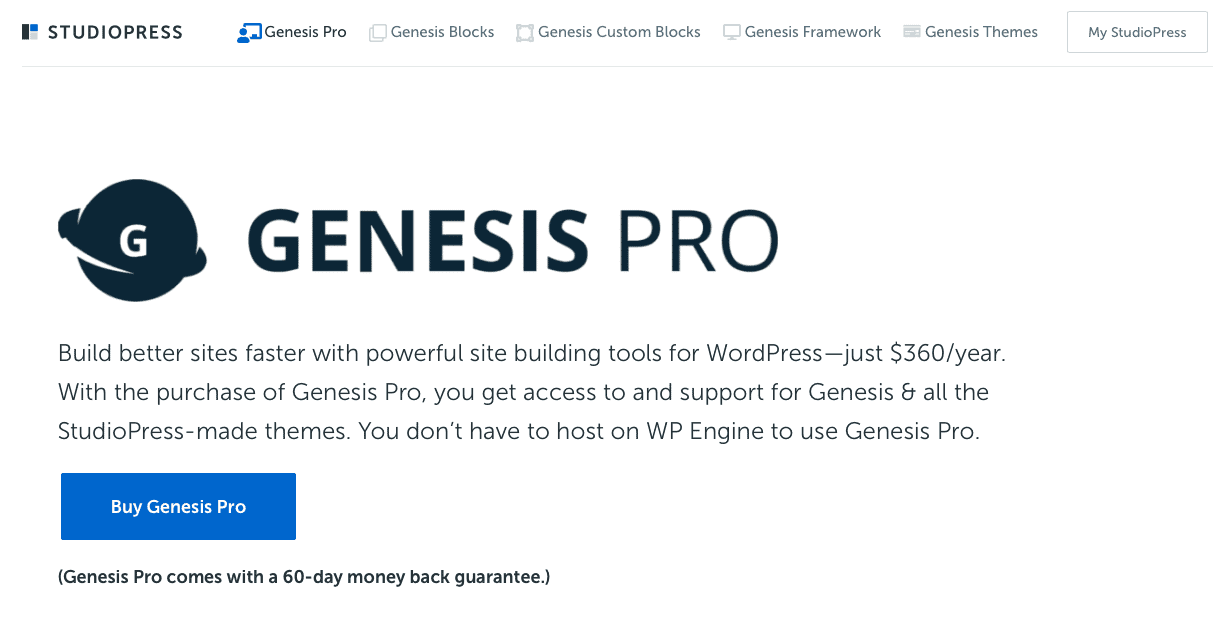
Last on our list is Genesis Pro. Developed by StudioPress, Genesis Pro adds a robust set of website building tools to WordPress.
Key features:
- Prefabricated content sections
- Complete page layouts
- Extensions to the Gutenberg Block Editor
- Access to Genesis Framework and Child Themes
- User-defined layouts and elements that can be saved in a library
Best WordPress page builder for: Developers. The features included in Genesis Pro are performance-oriented and emphasise client-side interaction.
Price: Genesis Pro costs $360/year and offers access to the Genesis Framework, all child themes, layouts, a block library, 24/7 support and use on unlimited websites.
16. Gutenberg
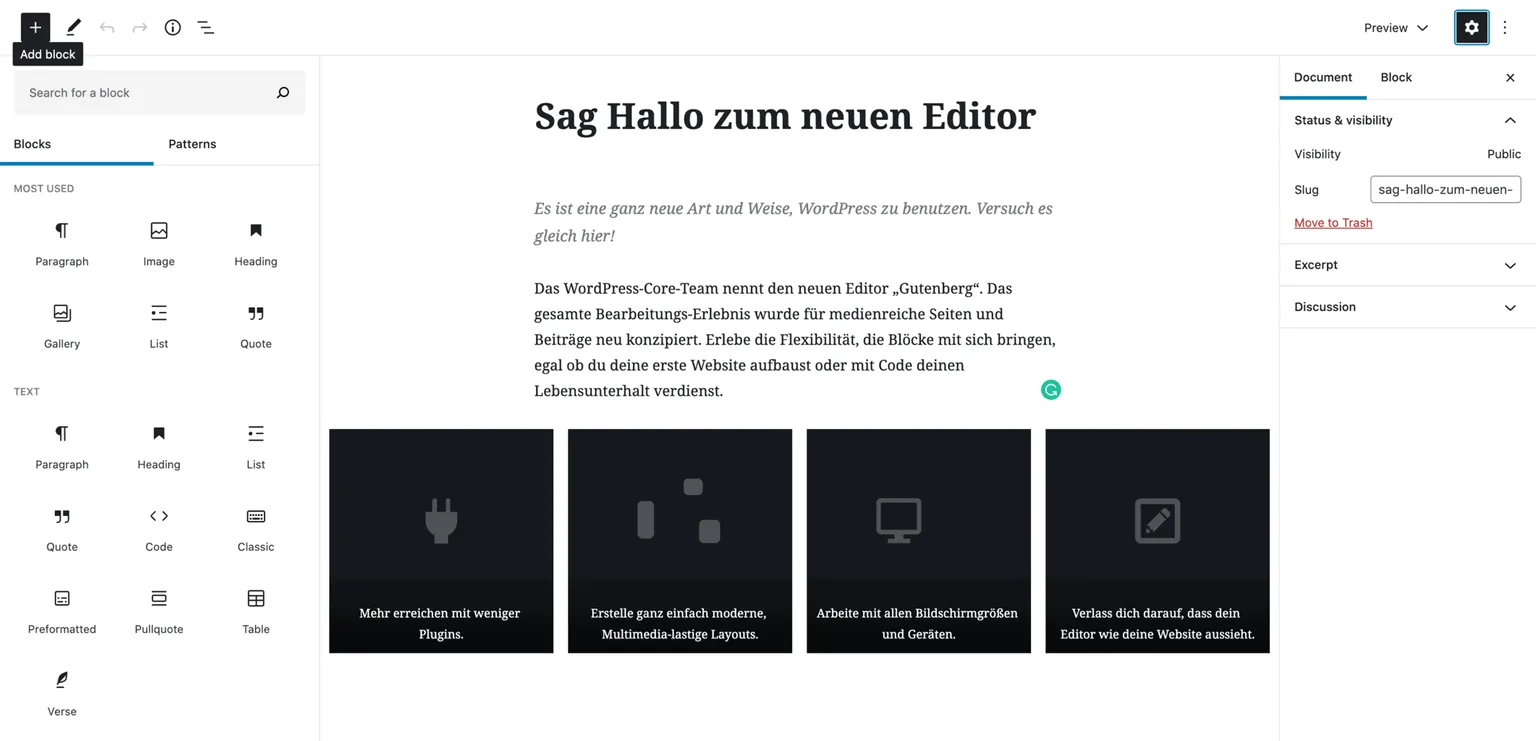
After the first page builders came onto the market, the WordPress developers started to develop their own variant called Gutenberg. Since WordPress 5.9, the Full Site Editor has been a core part of WordPress. This means you can edit posts and pages, and visually design your entire website layout, including header, footer and global styles. Gutenberg has evolved significantly and is today much more than a simple content editor.
How is Gutenberg developing?
Will Gutenberg replace the WordPress Page Builder in the long run? And what does the further development of Gutenberg look like? You can find out more and more in our article Gutenberg vs. WordPress Page Builder.
The current basic functions of Gutenberg are currently similar to WPBakery Page Builder: Assemble content quickly using drag & drop, publish and you’re done. Gutenberg is primarily aimed at average WordPress users who want to quickly redesign their content. However, professionals will expect more functions from a WordPress page builder, such as live editing in the frontend, customised layouts, a large selection of elements and advanced design, including the use of PHP and JavaScript.
As Gutenberg comes from the WordPress makers, the question is whether it will replace the other page builders at some point. It is more likely that there will be greater integration. Elementor already shows an example of how this can work. The Elementor Blocks for Gutenberg plugin integrates templates into the Gutenberg editor.
WPBakery Page Builder takes a similar approach: Gutenberg blocks can be used there together with other elements. It’s more of a fusion than a competition. This is good for you as a user, because you can utilise the advantages of both WordPress page builders at the same time.
As Gutenberg is free and included in the latest WordPress versions, you don’t need to download and install the WordPress page builder separately. Additional elements from third-party providers are available as plugins in the WordPress library. These include Gutenberg Blocks and Stackable.
Advantages of Gutenberg:
- Additional installation not necessary
- Simple interface
- Good for simple content design
Disadvantages of Gutenberg:
- No front-end mode
- Other WordPress page builders offer more options
Gutenberg or page builder: Which is the better choice for WordPress developers?
For most professional projects with custom layouts and individual designs, a dedicated page builder is the stronger choice. That said, Gutenberg has come a long way and is no longer a weak alternative.
What speaks for Gutenberg
Gutenberg is free, built directly into WordPress and requires no additional plugin. This keeps your installation lean and reduces potential compatibility issues. Since the introduction of the Full Site Editor in WordPress 5.9, you can also visually edit headers, footers and global styles.
Performance is another strong argument. Gutenberg generates significantly less code overhead than most page builders and typically delivers better Core Web Vitals scores. For simple websites, blogs or projects where loading speed and clean code are the priority, Gutenberg is often the smarter choice.
And there is one more thing worth mentioning: content created in Gutenberg stays intact after deactivation. No shortcode chaos, no broken layouts.
What speaks for a page builder
Page builders give you significantly more design freedom. With tools like Elementor, Divi or Bricks you can build complex layouts, custom templates and advanced animations that are hard to achieve with Gutenberg alone.
Live editing in the frontend is particularly useful. You see your changes in real time without switching between editor and preview, which saves time and makes collaboration with clients much easier.
Add to that the large selection of pre-built templates, modules and third-party extensions. If you need to deliver professional results quickly, page builders offer a clear productivity advantage. And for agencies running many similar projects, reusable layouts and templates quickly become indispensable.
Page builders need strong hosting
A WordPress page builder gives you maximum design freedom. But without the right hosting, that freedom does not get you very far. Tools like Elementor or Divi load additional CSS and JavaScript that can quickly lead to noticeable loading times on a weak server. Performance, security and reliability make all the difference here.
These hosting features are particularly important when working with page builders:
- Server-side caching for fast loading times and better search engine visibility
- Automatic backups so you can roll back layout changes at any time
- A staging environment to safely test new pages or features before going live
- WooCommerce compatibility for online stores and landing pages
- A secure WordPress environment optimized for all major page builder tools
How Raidboxes supports your page builder setup
Our platform is built to handle the technical side so you can focus on the design. That means full creative control for you, and no worries about the infrastructure.
- Fully managed, GDPR-compliant and optimized for performance
- Ideal for agencies, freelancers and businesses
- Built-in staging environment, automatic backups and server-side caching
- Hosting made in Germany with a focus on sustainability and data protection
Start your free 14-day trial and see for yourself.
Conclusion: The best WordPress page builders
The builders covered in this guide represent the best options currently available, but the right choice always comes down to your specific situation. Features matter, but so does the actual experience of working with a tool day to day. Before committing to one, it is worth testing a few options yourself and seeing which one fits your workflow.
If you want to dig deeper into the future of WordPress page builders, these resources are worth a read:
- CodeinWP shares 12 things we need to see from WordPress page builders – and which WordPress page builders are already doing it right.
- The experts at WordPress Tavern answer the question of whether WordPress page builders will remain competitive in the block era.
And once you have found your ideal page builder, make sure your hosting can keep up. A great builder running on the wrong server will always underperform. Raidboxes offers WordPress hosting built for exactly this, with server-side caching, automatic backups and a staging environment included.
Frequently Asked Questions about the best page builder
What is the best WordPress page builder in 2026?
There is no single best page builder for all use cases. Elementor leads the market for beginners and agencies, Bricks and Oxygen are strong choices for advanced users who prioritize clean code, and Divi Builder remains popular for design-heavy professional websites with unlimited sites support.
What is the difference between a page builder and the native WordPress interface?
The native WordPress interface, meaning Gutenberg, lets you build basic web pages with blocks. A dedicated drag and drop editor goes further, offering custom layouts, live page builder functionality, advanced design controls and support for sales pages, online stores and fully functional site building.
Which WordPress page builder is best for client sites and agencies?
For client sites, Elementor and Beaver Builder are strong choices due to their user friendly interface and white labeling options. Divi Builder and Bricks also work well for agencies building professional websites across many sites, especially when a lifetime access plan reduces long-term costs.
Do I need a premium WordPress theme to use a page builder?
Most page builders work independently of your theme. Tools like Bricks replace the theme entirely, while others like Elementor or Divi run alongside any WordPress builder compatible theme. A premium WordPress theme can add polish, but is not required to create professional websites.
How does web hosting affect the performance of WordPress page builders?
Web hosting has a direct impact on how fast your page builder runs. Many page builders load additional CSS and JavaScript, which can slow down poorly hosted sites. Managed WordPress hosting with server-side caching ensures that even resource-intensive builders like Elementor or Divi deliver fast load times.
Your questions about WordPress Page Builder
What are your experiences with WordPress Page Builders? What questions do you have about Maddy? Let us know in the comments! For more insights on WordPress, web design or online business, follow Raidboxes on Facebook or LinkedIn – or subscribe to our newsletter.


Leave a Reply